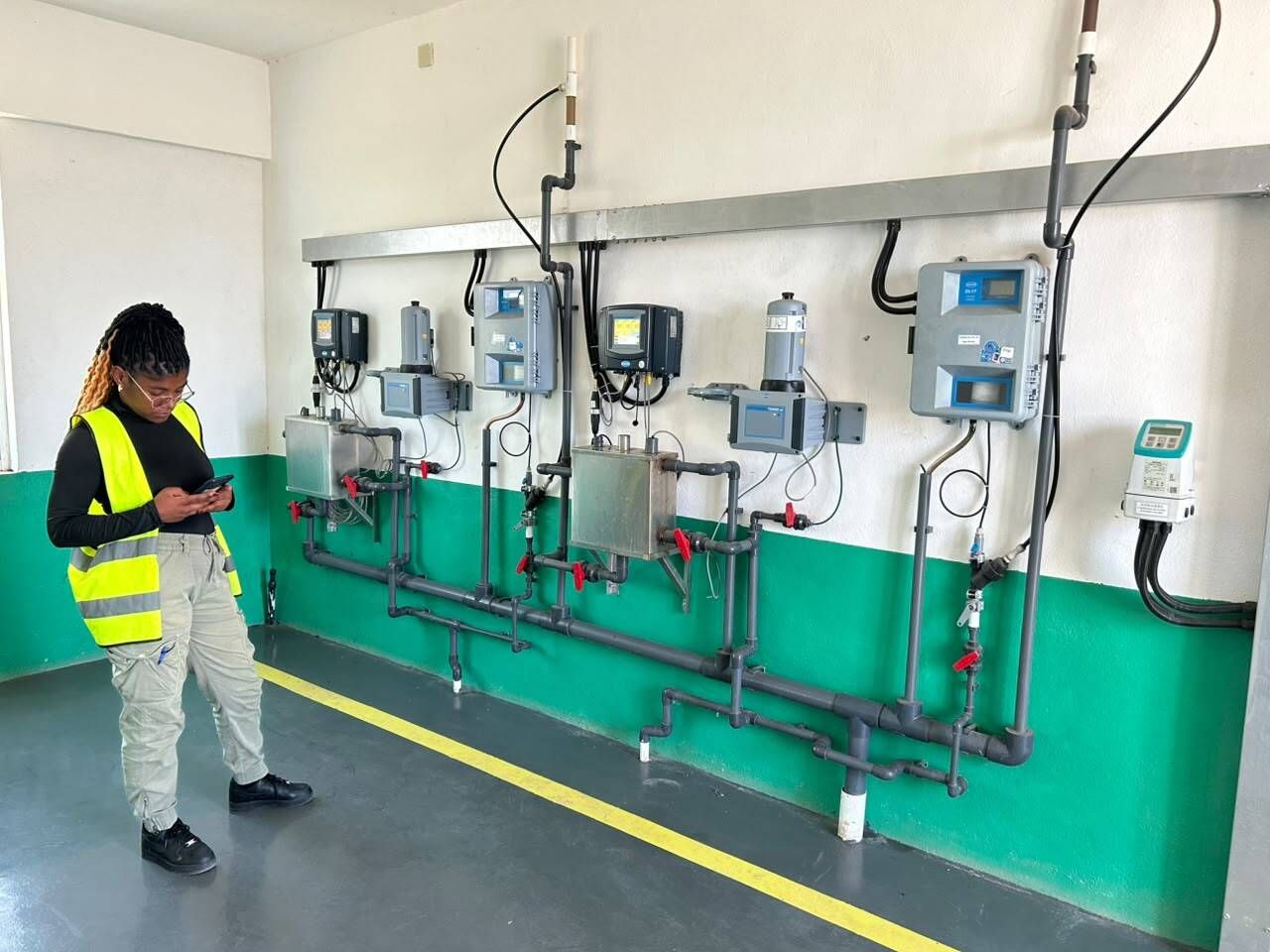
A report can show that a clinic has no water. It cannot fix it. Safe care depends on water, toilets, handwashing, cleaning, waste disposal, power, and buildings that work. Ministries need a few national indicators. Facility teams need the detail to put problems right. A good digital system serves both.
National reporting needs a short list of standard indicators. A facility team needs much more: what inspectors saw, photos, test results, risks, who is responsible, deadlines, costs, and proof that repairs were made. Putting all of that into DHIS2 makes the national system hard to manage. Keeping only the indicators leaves facilities with no way to track improvements.
The answer is to split the work. Run WASH FIT or similar assessments in mWater or Solstice, and manage the improvement plan there. Send the agreed indicators to DHIS2. DHIS2 stays the national health system, and the detail stays where the work is done.
| Area | What inspectors record | National indicator |
|---|---|---|
| Water | Source, reliability, quantity, storage, quality tests, faults | Facility meets the agreed water service level |
| Sanitation | Toilets by type and location, accessibility, separate toilets for women and men, whether they work | Facility meets the agreed sanitation service level |
| Hand hygiene | Working handwashing stations, soap or alcohol rub, stations at points of care | Working hand hygiene services available |
| Health-care waste | Sorting, storage, treatment, disposal, incidents | Waste is sorted and treated safely |
| Cleaning | Procedures, supplies, staff duties, inspections | Facility meets the agreed cleaning standard |
| Management | Improvement plan, budget, named people, open and finished tasks | Facility has a current improvement plan |
Each national indicator can be set up as an mWater indicator, calculated automatically from the assessment answers for every facility. The same indicator then feeds dashboards, maps and the DHIS2 exchange. See Using indicators.
A ranking of facilities can blame staff for problems they cannot fix, such as a broken town water supply. It is more useful to track each open problem: what must change, who can change it, what it costs, and how the fix will be checked. Dashboards should show service levels and also how long each problem has been open, and who owns it.
Try the full cycle in a few facilities first: assess, review, assign, repair, check, and report to DHIS2. Include some facilities with poor connectivity and different management. Then check that the process led to decisions, finished repairs, and correct DHIS2 reports.
Use the current WHO and UNICEF WASH FIT materials, your national standards, and the DHIS2 guidance for your country. The digital system should follow the approved method, not change it.
Planning a health, WASH, or environmental information system? Contact info@solstice.world and we will help you plan it.